

🤖 Perplexity: An AI Search Engine Built for Research
📦 What Is Perplexity?
Perplexity is not simply another chatbot. Its core idea is closer to an AI-powered search engine: you ask a question in natural language, Perplexity searches the web, compares information from different sources, and turns the results into a readable answer with citations. This makes it particularly useful when you do not want to open ten browser tabs just to understand one topic.
Unlike a traditional search engine, the main product is not a list of blue links. Perplexity tries to give you a direct answer first, while still showing where the information came from so you can check the original source.
🎯 Why Perplexity Stands Out
The biggest advantage is the combination of web search and AI reasoning. Perplexity can handle questions that require several pieces of information instead of treating every search as an isolated keyword query.
- 🔍 AI Search: Ask questions naturally instead of constructing complicated search keywords.
- 📚 Source Citations: Answers include references that make it easier to verify important information.
- 🧠 Deep Research: Designed for more complicated research tasks that require multiple sources and deeper analysis.
- 📎 File Analysis: Upload documents and use them as context for questions and analysis.
- 🎨 AI Creation: Paid plans provide access to image generation and additional creation features.
- 🤖 Multiple AI Models: Perplexity can provide access to models from different AI companies depending on the plan and mode.
- 💻 Computer Integration: Its desktop application can work with selected local files and folders, making it more useful for research and knowledge work.
🌍 How Popular Is Perplexity Worldwide?
Perplexity has developed into one of the better-known AI search products internationally. Public figures vary because different reports count different things, such as the core search product, mobile users, Comet, and other Perplexity products. A safer benchmark is that Perplexity reached around 30 million monthly active users in April 2025, while research published in 2026 has placed its broader user base substantially higher depending on what products are included.
Rather than chasing a single headline number, it is more useful to look at how Perplexity is being used. Its strongest audience is people who regularly research products, technology, business, academic subjects, current events and professional topics. The product has also expanded from AI search toward research, agents, desktop workflows and enterprise use.
⚡ Main Features You Should Know
🔍 AI Search
For everyday questions, simply type what you actually want to know. For example, instead of searching “best running shoes 2026,” you can ask, “Which running shoes are suitable for a beginner running 5 km three times a week, and what are the main differences?” Perplexity can then research the topic and organize the answer.
📊 Pro Search and Deep Research
For more demanding questions, Perplexity offers deeper research modes. These are useful for market research, competitor analysis, academic research, product comparisons and long-form reports. The important difference is that you are asking Perplexity to investigate a topic rather than simply generate an answer from memory.
📋 File and Document Analysis
You can upload documents and ask Perplexity to summarize them, extract important information, compare sections, identify problems or answer questions based on the material. This is particularly useful for reports, research papers, business documents and technical materials.
🧩 Multiple Models in One Place
One interesting part of Perplexity is that it brings models from different AI providers into one research environment. The exact model selection changes over time, so the model selector inside your account should be treated as the current source of truth.
🛠️ How to Use Perplexity Effectively
1. Ask complete questions. Do not treat Perplexity exactly like Google. Give it the situation, goal and constraints. The more useful context you provide, the more useful the research tends to be.
2. Tell it what kind of answer you want. For example: “Compare these three products in a table and focus on price, performance, reliability and value for money.”
3. Ask for sources. When the information matters, open the cited sources rather than assuming the AI answer is automatically correct.
4. Use follow-up questions. A good research session is usually a conversation. Start broad, identify the important part, then ask Perplexity to investigate that part in greater detail.
5. Separate facts from opinions. For business or purchasing decisions, ask Perplexity to distinguish verified facts, estimates and recommendations. This reduces the risk of treating an AI-generated conclusion as a proven fact.

💡 A Better Prompt Formula
A practical structure is: Background + Objective + Constraints + Output format.
For example: “I run a small online store. Research the current market for wireless earbuds in the U.S. Compare the five major price segments, identify the most competitive product categories, cite the sources, and finish with three opportunities for a new seller.”
📥 How to Install Perplexity
Perplexity can be used directly through its website, so you do not need to install anything for basic use. For desktop users, Perplexity currently provides applications for Windows and Mac. The desktop version can work with selected local files and folders and provides additional desktop-oriented capabilities.
For Windows, you can install it through the Microsoft Store or use the installer provided through Perplexity. For Mac, download the desktop application, install it, sign in, and then choose which desktop capabilities and folders you want to make available.
Mobile users can also use Perplexity through its mobile applications. For most people, starting with the web version is the simplest way to evaluate whether it actually fits their workflow.
💰 Is Perplexity Free?
Yes. Perplexity has a free Standard plan, but the free tier has limits on advanced searches, advanced models, file uploads and other premium capabilities.
Perplexity Pro: The individual Pro plan is aimed at people who use Perplexity frequently for research and productivity. It provides expanded access to Pro Search, advanced AI models, Research, file and image uploads, image generation and other premium capabilities. The current web subscription price is generally $20 per month or $200 per year.
Education Pro: Verified students and educators can access Education Pro for $10 per month, subject to eligibility verification.
Perplexity Max: Max is designed for heavy users who need much higher access to advanced models and creation features. The current price is $200 per month or $2,000 per year on the web.
Enterprise: Enterprise Pro starts at $40 per user per month or $400 per year, while Enterprise Max is $325 per user per month or $3,250 per year. Enterprise plans add organizational controls, collaboration, security and administrative features.
👥 Who Should Use Perplexity?
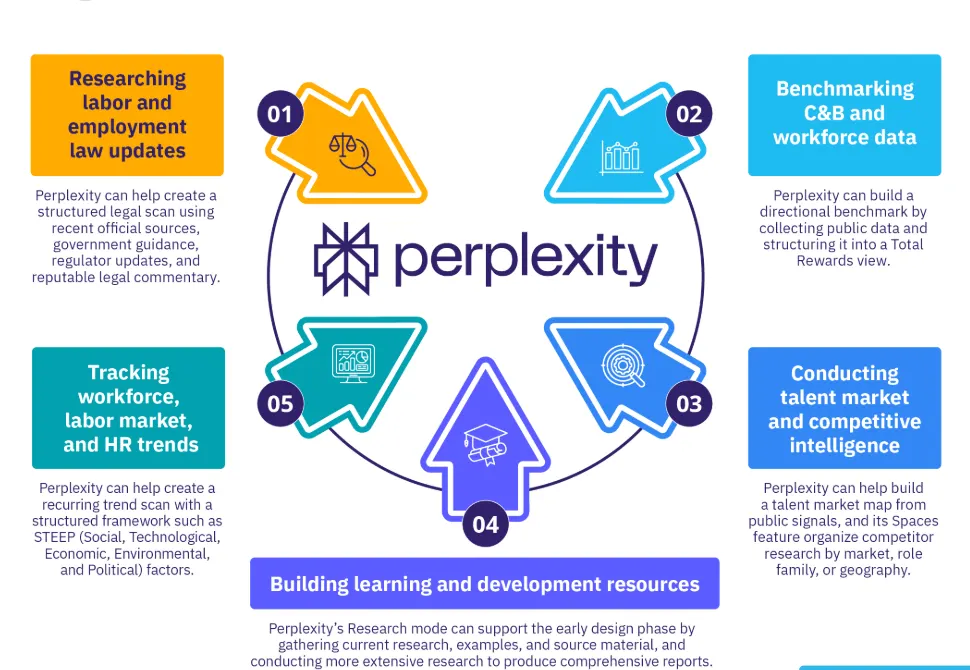
- 👨💻 Developers: Research technical documentation, libraries, frameworks and current technical information.
- 📈 Business Professionals: Conduct market research, competitor research and industry analysis.
- 🎓 Students: Explore subjects, compare sources and build research notes.
- ✍️ Writers and Creators: Research topics before writing articles, scripts and reports.
- 🛒 Shoppers: Compare products, specifications, prices and reviews before buying.
- 🏢 Companies: Build research workflows around internal documents and external information.
❓ Common Problems and Mistakes
“Can I trust every answer?” No. Citations make verification easier, but they do not make every generated conclusion correct. For medical, legal, financial or other high-stakes information, check the original sources and qualified professionals.
“Why does the answer change?” Perplexity searches live information and can use different AI models. Search results, model availability and the underlying web content can change over time.
“Why can't I use some advanced features?” Many advanced capabilities are restricted by plan, usage limits or product availability. Free users should expect substantially lower limits than Pro and Max users.
“Why is the answer sometimes too long?” Be explicit about the format. Tell Perplexity to give you “5 bullet points,” “a 300-word summary,” or “a comparison table.”
🔍 Perplexity vs. Traditional Search
Traditional search is still better when you already know the exact website or page you want. Perplexity becomes more useful when the question is complicated and you need information gathered from several sources. In practice, the two approaches work well together: use Perplexity to understand the landscape, then open the original sources when accuracy matters.
🏁 Final Verdict
Perplexity is best understood as an AI research layer on top of web search rather than simply another chatbot. Its strongest advantage is the workflow: ask a question, gather information, inspect sources, ask follow-up questions and turn the research into something useful. If your daily work involves researching products, markets, technologies, competitors or unfamiliar subjects, the free version is worth trying before deciding whether Pro is worth paying for.
Comments