

⚡ Replit Is More Than an Online IDE
Replit started with a simple developer-friendly idea: give people a browser-based environment where they can write and run code without setting up a local stack.
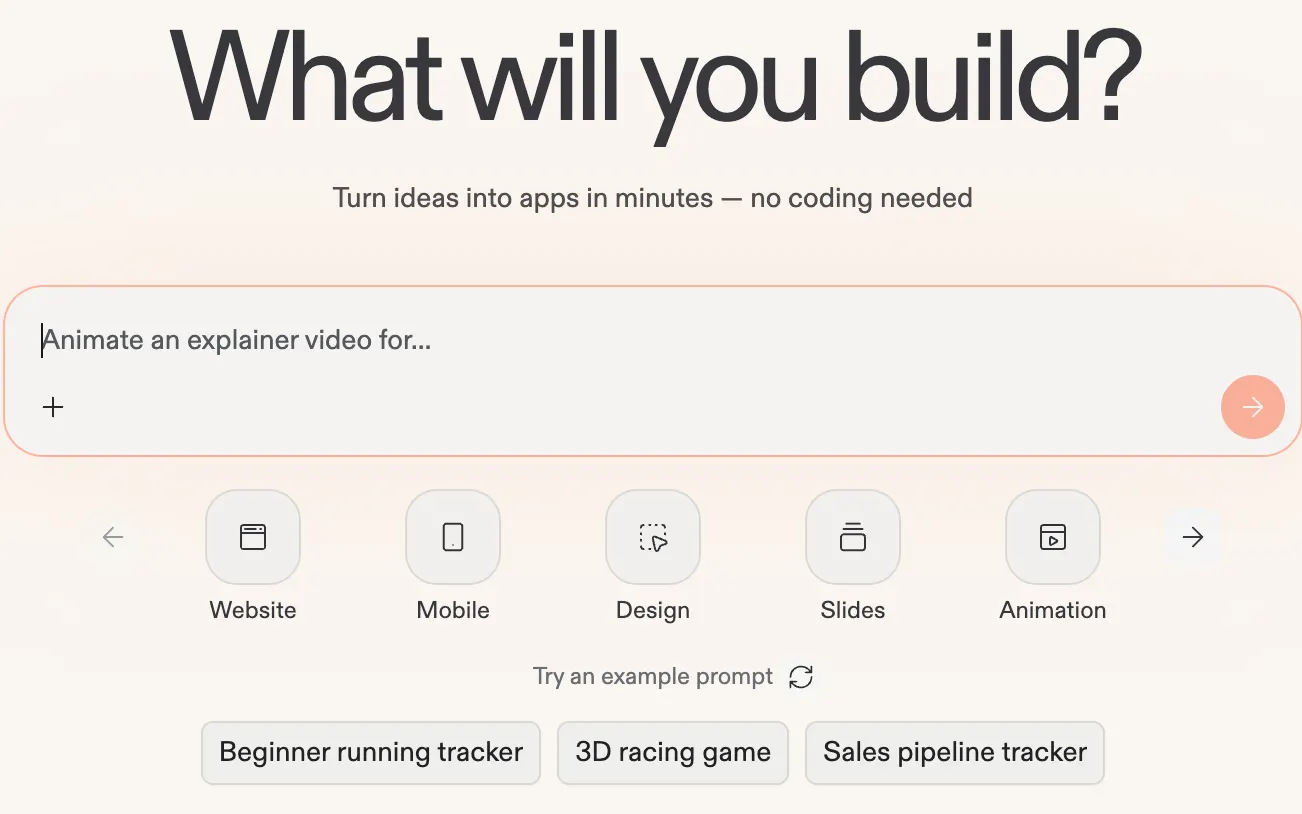
That positioning has changed. Replit is now pushing much harder toward AI-native software development, with Agent sitting at the center of the product.
The interesting part isn't that Agent can generate code. Plenty of AI products can do that. The difference is that Replit tries to give the agent access to the broader development loop: building, testing, refining, connecting services, and deploying the result.
🧑💻 Why Startup Teams Care
For an early-stage startup, speed matters. You may have an idea in the morning and want something testable with customers the same afternoon.
Replit is built around that workflow. Instead of spending hours configuring infrastructure before the first screen exists, a founder can describe the product and let Agent create an initial version.
That makes Replit particularly interesting for prototypes, internal tools, MVPs, experiments, and small production applications.
🤖 What Replit Agent Actually Does
Natural-language development: Describe what you want instead of starting with an empty editor.
Full-stack generation: Agent can work across frontend, backend, database, and application logic.
Self-testing: Agent can test its work and use the results to fix problems.
Parallel agents: Multiple tasks can be handled in parallel rather than forcing every change into a single queue.
Integrations: Replit connects applications with services such as OpenAI, Stripe, and Google Workspace.
Deployment: A finished project can be published directly through the platform.
Collaboration: Teams can work on the same projects rather than passing local development environments around.
🎯 Your First Replit Project
Don't start with “build me the next Uber.” Give Agent a problem with a clear outcome.
A much better first project might be: “Build a simple sales pipeline dashboard. Users need to create customers, assign a sales stage, add follow-up notes, search customers, and see a summary dashboard. Store the records in a database and add authentication.”
Once the first version works, test it like a real user. Click every important button. Try invalid input. Refresh the browser. Check whether data actually persists.
📝 How to Work With Agent
Good Replit prompts look more like product requirements than clever AI prompts.
Tell Agent what the application does, who will use it, what must exist, and what it should not change.
For example, instead of asking for “a modern CRM,” specify the workflow, fields, permissions, data model, visual direction, and acceptance criteria.
Then iterate. Ask for one meaningful change at a time when the project becomes complex. This makes it much easier to identify which instruction caused a problem.
🎨 What Makes Agent 4 Different?
Replit Agent 4 pushes the platform beyond conventional coding assistance. Replit now emphasizes visual design, parallel agents, multiple artifacts, and the ability to move between design and implementation without leaving the platform.
The parallel-agent model is particularly interesting for larger projects. Instead of one AI handling everything sequentially, separate tasks can be worked on simultaneously while the overall project remains visible.
In other words, Replit is trying to turn AI coding from a chat feature into an operating model for building software.
☁️ Do You Need to Install Anything?
Not for the core workflow. Replit is cloud-based, which means you can start working from a browser without assembling a local development environment first.
Replit also offers mobile apps for iOS and Android, making it possible to manage projects away from a desktop.
For serious engineering teams, the bigger advantage is not simply avoiding installation. It's having development infrastructure, deployment, databases, authentication, and AI agents available inside the same platform.
💵 Replit Pricing
Replit currently has a free Starter option as well as paid plans. The official pricing page currently lists Starter as free, Replit Core at an effective $20 per month when billed annually, and Replit Pro at an effective $95 per month when billed annually.
Starter includes free daily Agent credits and supports basic app building, databases, and publishing, while paid plans provide substantially more AI usage and collaboration capabilities.
Core is positioned for personal projects and smaller applications, while Pro is designed for commercial and professional development with higher monthly credits, stronger models, and more parallel-agent capacity.
Pricing and AI usage limits can change, so teams should check the current official pricing page before committing to a long-term plan.
👥 Who Is Replit For?
Founders can use it to validate ideas. Product managers can build functional prototypes. Designers can turn concepts into working interfaces. Developers can use it for rapid implementation and internal tooling.
It is also useful for education because the barrier between “I have an idea” and “I can run something” is extremely low.
But professional teams should not confuse lower development friction with lower engineering responsibility. Security, architecture, data handling, testing, and code review still matter.
⚠️ Problems You Will Probably Run Into
Vague requirements: Agent has to guess when you haven't defined the desired behavior.
Large changes: Asking for ten unrelated changes in one message makes debugging harder.
Broken assumptions: Generated code can work technically while misunderstanding the product requirement.
Data problems: Database changes deserve extra review, especially when real customer data is involved.
AI usage costs: Complex tasks can consume more Agent resources than simple iterations.
⚖️ Pros and Cons
Pros: fast setup, browser-based development, natural-language app creation, integrated infrastructure, built-in deployment, collaboration, third-party integrations, and increasingly capable autonomous agents.
Cons: AI output still requires review, large applications can become difficult to manage, advanced projects still benefit from experienced engineers, and AI usage can become a meaningful part of the development budget.
🌎 Where Replit Is Heading
Replit is clearly positioning itself beyond the traditional cloud IDE category. Its current product direction combines AI agents, design, application infrastructure, collaboration, and deployment in one environment.
That matters because the competition is no longer simply “which online editor has the best code completion?” The bigger question is whether a platform can take someone from an idea to a functioning product without forcing them to stitch together a dozen separate services.
🏁 Is Replit Worth Trying?
For prototyping and rapid application development, absolutely worth testing.
For a production engineering organization, the answer depends on the project. Replit can remove a lot of friction, but it doesn't remove the need for engineering judgment.
The best way to evaluate it isn't by asking Agent to build something impressive. Give it a real, annoying task your team already spends hours doing. That's where the productivity difference becomes measurable.
Comments